If you have ever stood in a jewellery shop watching your mother haggle over making charges, you already understand why gold occupies such a special place in the Indian household. But somewhere between the locker full of family jewellery and the mutual fund SIPs your colleague keeps talking about, there is a quieter, more practical way to hold precious metals Gold ETFs and Silver ETFs.
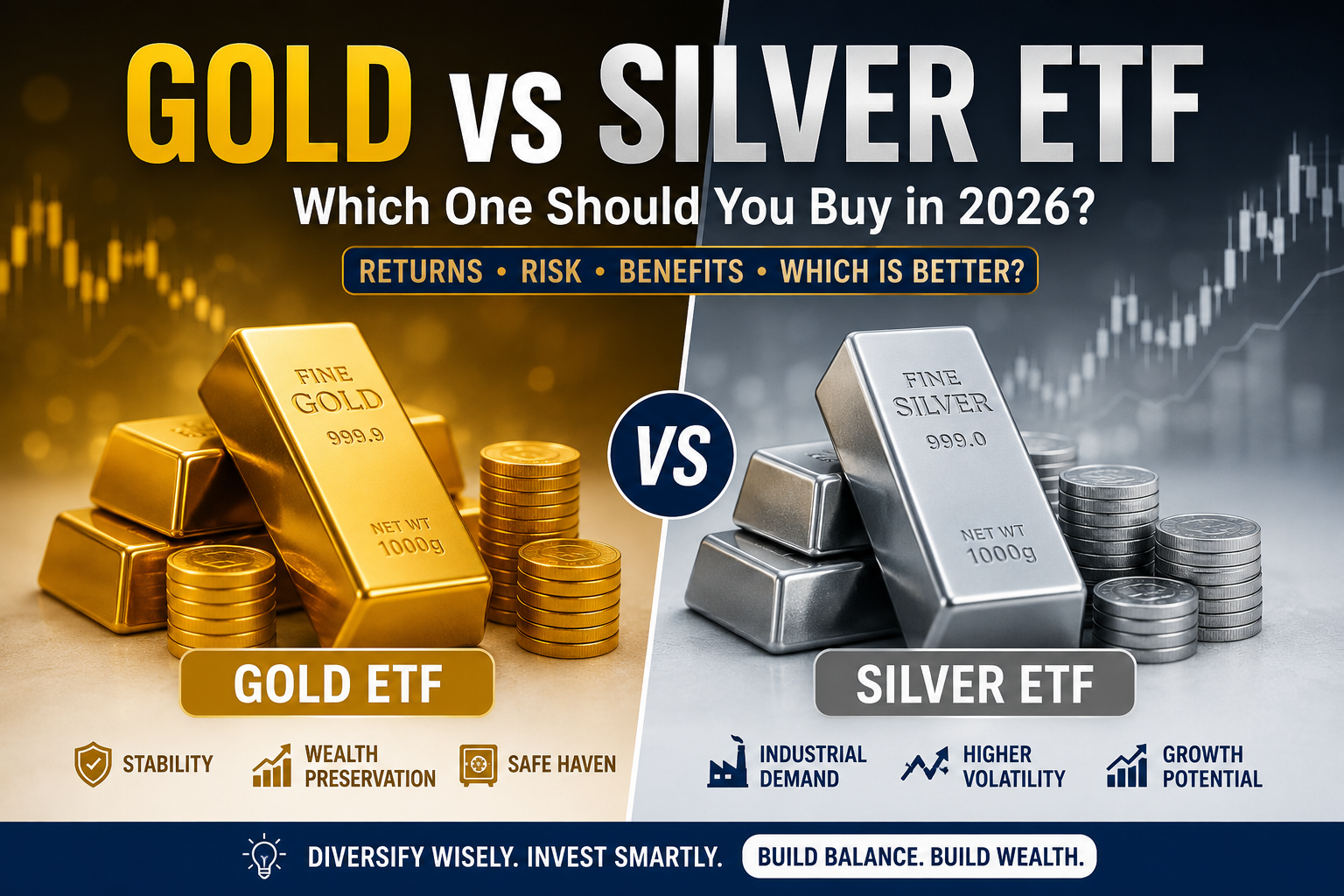
Quick takeaway: Gold ETFs are generally the safer, more stable choice for wealth preservation and portfolio diversification, while Silver ETFs tend to be more volatile but can offer sharper upside because of silver’s industrial demand. If you want stability, lean gold. If you can stomach bigger swings for potentially bigger gains, silver deserves a place too. Most seasoned investors don’t pick one over the other they hold both in a ratio that matches their risk appetite.
Let’s unpack why.
What Exactly Is a Gold ETF or Silver ETF?
An Exchange Traded Fund (ETF) is a basket of assets that trades on the stock exchange just like a regular share. A Gold ETF tracks the domestic price of physical gold, and a Silver ETF does the same for silver. When you buy one unit, you are essentially buying a small, dematerialised slice of that metal, backed by physical bullion stored in secure vaults by the fund house.
This matters because it solves three problems that have annoyed Indian gold buyers for generations:
- No making charges – you pay closer to the actual metal price, not a premium for craftsmanship you didn’t ask for.
- No storage worry – there’s no locker rent, no fear of theft, and no awkward conversation with a bank manager.
- Easy liquidity – you can sell a few units in seconds through your demat account, unlike a gold coin that needs a buyer or a trip back to the jeweller.
I remember helping a friend calculate the actual cost of a 10-gram gold coin she’d bought for an investment purpose. Between GST, making charges, and the jeweller’s margin, she was already down nearly 8-10% before the price of gold even moved. That gap simply doesn’t exist with ETFs.
Gold ETF: The Steady Hand in Your Portfolio
Gold has historically played the role of a shock absorber. When equity markets fall, when inflation runs hot, or when there’s global uncertainty, gold tends to hold its value or even rise, because investors treat it as a safe haven.
Why Investors Lean Toward Gold ETFs
- Lower volatility compared to silver and equities
- Inflation hedge – over long periods, gold has generally kept pace with or outpaced inflation
- Global demand base – central banks, jewellery demand, and investment demand all support prices
- Portfolio diversification – gold often moves differently from stocks and bonds, which smooths out overall portfolio swings
Financial planners commonly suggest keeping somewhere around 5-15% of your overall portfolio in gold, not as a way to get rich, but as insurance against the years when everything else in your portfolio is having a bad run.
Silver ETF: The Underdog With Industrial Muscle
Silver is often called “poor man’s gold,” but that nickname undersells what’s actually happening with silver demand today. Unlike gold, which is mostly a store of value, silver has real industrial usage solar panels, electronics, electric vehicle components, and medical equipment all rely on silver.
Why Silver ETFs Are Gaining Attention
- Dual demand driver both investment demand and industrial demand push silver prices, which gold doesn’t benefit from in the same way
- Higher volatility, higher potential swings silver can rally harder than gold during bullish phases, but it can also fall faster during downturns
- Lower entry price per unit this makes it easier for smaller investors to accumulate more units
- Growing green-energy demand the push toward solar power and EVs has structurally increased industrial silver consumption over the past decade
A colleague of mine started a small silver ETF SIP a few years ago purely because the entry cost per unit was lower than gold, and he wanted to build quantity while learning how commodity markets behave. He’ll be the first to admit the ride has been bumpier than his gold holdings but also, in the good years, noticeably more rewarding.
Gold vs Silver ETF: Side-by-Side Comparison
| Factor | Gold ETF | Silver ETF |
|---|---|---|
| Volatility | Lower, more stable | Higher, sharper swings |
| Primary demand driver | Investment & jewellery | Investment & industrial use |
| Role in portfolio | Wealth preservation, hedge | Growth potential, diversification |
| Liquidity | High | High, though slightly thinner in some funds |
| Ideal investor | Conservative, first-time metal investor | Risk-tolerant, longer time horizon |
| Price sensitivity to global cycles | Reacts to interest rates, currency, geopolitical risk | Reacts to all of the above, plus industrial/manufacturing cycles |
How to Decide Which One Fits You
There’s no single right answer here it genuinely depends on what you’re trying to achieve.
Choose Gold ETF if:
- You want a stable store of value rather than aggressive growth
- You’re investing for a specific long-term goal like retirement or a child’s future
- You prefer fewer sleepless nights over price charts
- You already have equity exposure and want a genuine hedge against market downturns
Choose Silver ETF if:
- You’re comfortable with higher short-term price swings
- You believe industrial demand (solar, EVs, electronics) will keep growing
- You want a lower per-unit entry point to build a position gradually
- You already hold gold and want to diversify further within precious metals
Or, Consider Doing Both
This is honestly what most experienced investors end up doing. A common approach is allocating a larger share to gold for stability and a smaller share to silver for growth potential something like a 70:30 or 60:40 split, adjusted to personal risk tolerance. This way, you’re not betting your entire precious-metals allocation on one metal’s cycle.
A Few Practical Things to Check Before You Buy
Before placing an order on either ETF, it helps to look beyond just “gold vs silver” and check the fund-specific details:
- Expense ratio – lower is generally better, since it directly eats into your returns over time
- Tracking error – how closely the ETF’s price follows the actual metal price
- Trading volume – higher liquidity means tighter buy-sell spreads
- Fund house track record – established asset management companies tend to have better operational discipline
You’ll need a demat and trading account to buy either type of ETF, and both can be bought in small quantities, which makes them accessible even if you’re starting with a modest monthly budget.
Frequently Asked Questions
Is Silver ETF riskier than Gold ETF? Generally, yes. Silver prices tend to swing more sharply in both directions because the market is smaller and more sensitive to industrial demand cycles, compared to gold’s more stable, safe-haven behaviour.
Can I hold both Gold and Silver ETFs together? Absolutely, and many investors do exactly this. Holding both allows you to balance gold’s stability with silver’s growth potential, rather than depending entirely on one metal’s price movement.
Do Gold and Silver ETFs pay any dividend or interest? No. These ETFs track the price of the physical metal, so your returns come purely from price appreciation, not from any regular income or interest payout.
Are ETFs better than buying physical gold or silver? For pure investment purposes, ETFs usually work out better because they avoid making charges, storage costs, and purity concerns. However, if you need actual jewellery or physical possession for personal or cultural reasons, physical metal still has its place.
Final Thoughts
Precious metals aren’t about chasing quick profits they’re about giving your portfolio a bit of ballast when everything else feels shaky. Gold ETFs offer that steady, dependable presence, while Silver ETFs bring a bit more energy and upside potential if you’re willing to ride the bumps. Take a look at your existing portfolio this week, figure out how much of it currently leans toward stability versus growth, and use that gap to decide your gold-to-silver mix rather than picking one blindly.
Disclaimer: This article is for general informational and educational purposes only and should not be considered personalised financial advice. Precious metal prices can be volatile and past performance does not guarantee future results. Please consult a registered financial advisor and assess your own risk appetite before investing.